ETFs
Overview
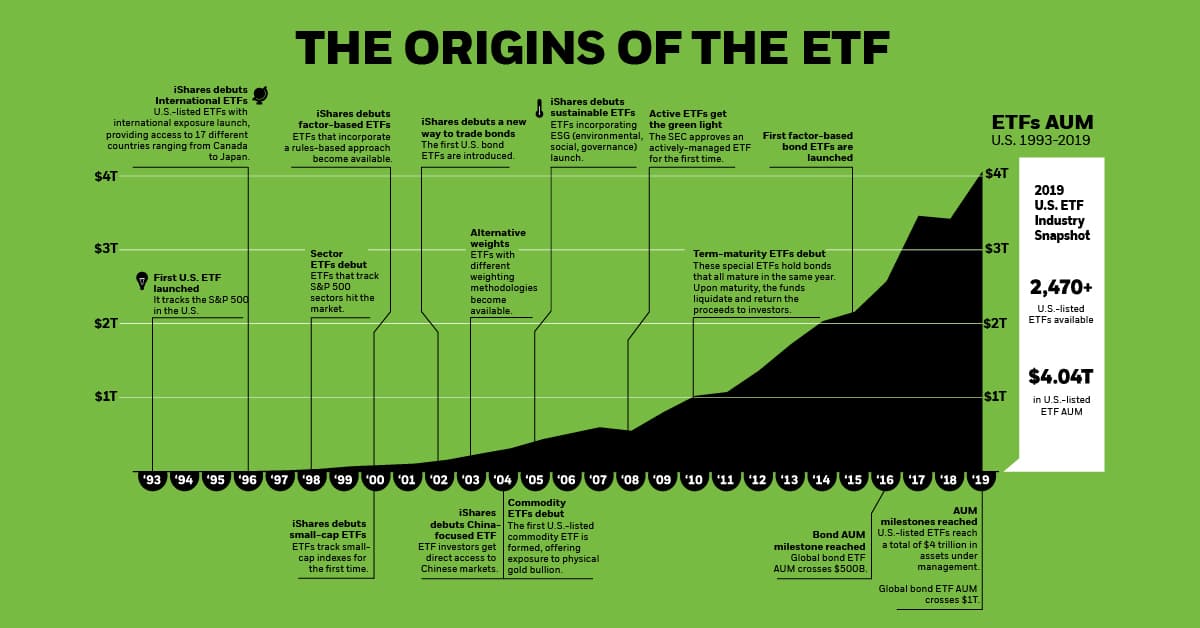
An exchange-traded fund, or ETF, is a type of investment fund that can be bought and sold on a stock exchange.
While there are different varieties of ETFs, they all allow investors to invest in a “basket” of different assets. Depending on the type, the basket may contain securities like stocks, commodities like gold and silver, or another class of assets.
Exchange-traded funds are popular investment vehicles for both retail investors and institutional investors. As of 2024, there were over 3,000 listed in the US, and the global ETF market was worth more than $10T.
These funds make it easier for the average person to diversify their portfolio while lowering risk in comparison to investing in an individual security. As of last year, more than 45% of retail investors chose to invest in ETFs due to these and other perks, such as their tax advantages.
1440 Findings
Hours of research by our editors, distilled into minutes of clarity.




Explore Business & Finance
The United States is home to more than 33 million businesses, the vast majority of which are small businesses, with millions being created (and others closing shop) every year. These businesses often rely on loans, provide the goods and services that keep the economy flowing, and sometimes even grow large enough to enter public markets or provide private investment opportunities. Explore key topics central to business and finance, from the role of the Federal Reserve to how initial public offerings work, how millions of American students finance higher education, and more.
Featured Topics
- 401(k)
- Amazon
- Bankruptcy
- Bitcoin
- Bonds
- Capital Gains
- College Tuition
- Consulting
- Creator Economy
- Credit Unions
- Federal Reserve
- Gig Economy
- Individual retirement accounts
- Inflation
- Initial Public Offerings
- Investment Banking
- Labor Unions
- Life Insurance
- Macy’s
- Minimum Wage
- Mutual Funds
- OpenAI
- Startups
- Stock Market
- Student Debt
- US Currency
- Venture Capital
- Wall Street
- Warren Buffett
- Y Combinator