Trademarks
Overview
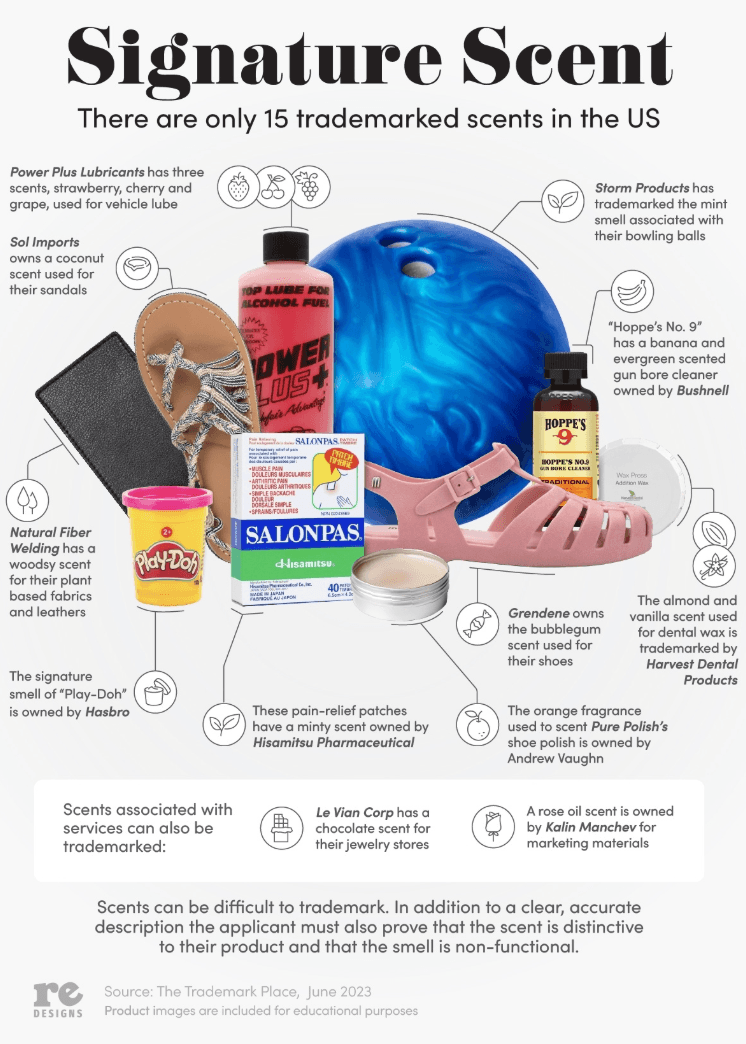
A form of intellectual property, trademarks are legal identifiers that distinguish a service's or product's ownership. Anything that uniquely identifies a brand, like logos, phrases, images, and even scents, can be trademarked—as long as that identifier isn't the product's primary purpose and is distinct. To receive a trademark, brands must file with the United States Patent and Trademark Office.
Trademarks are intended to protect businesses from infringement and consumer confusion. They can also boost brand awareness, allowing companies to use exclusive branding and stand out from competitors. It generally takes less than $1K to file a trademark, but having one can be worth millions of dollars in brand value.
However, businesses risk losing exclusive rights to any trademarks that become general words (think: aspirin or thermos). Similarly, trademarks have to be maintained. Not using a trademark or failing to update the filing can constitute abandonment, meaning that trademark is back in the public domain and up for grabs.
1440 Findings
Hours of research by our editors, distilled into minutes of clarity.



Explore Business & Finance
The United States is home to more than 33 million businesses, the vast majority of which are small businesses, with millions being created (and others closing shop) every year. These businesses often rely on loans, provide the goods and services that keep the economy flowing, and sometimes even grow large enough to enter public markets or provide private investment opportunities. Explore key topics central to business and finance, from the role of the Federal Reserve to how initial public offerings work, how millions of American students finance higher education, and more.
Featured Topics
- 401(k)
- Amazon
- Bankruptcy
- Bitcoin
- Bonds
- Capital Gains
- College Tuition
- Consulting
- Creator Economy
- Credit Unions
- Federal Reserve
- Gig Economy
- Individual retirement accounts
- Inflation
- Initial Public Offerings
- Investment Banking
- Labor Unions
- Life Insurance
- Macy’s
- Minimum Wage
- Mutual Funds
- OpenAI
- Startups
- Stock Market
- Student Debt
- US Currency
- Venture Capital
- Wall Street
- Warren Buffett
- Y Combinator