Electoral College
Overview
The Electoral College is the system the United States uses to elect its president every four years. Rather than a single national vote, 538 electors allocated across the states and Washington, DC, decide the election. A candidate must win a majority—270 electoral votes—to become president.
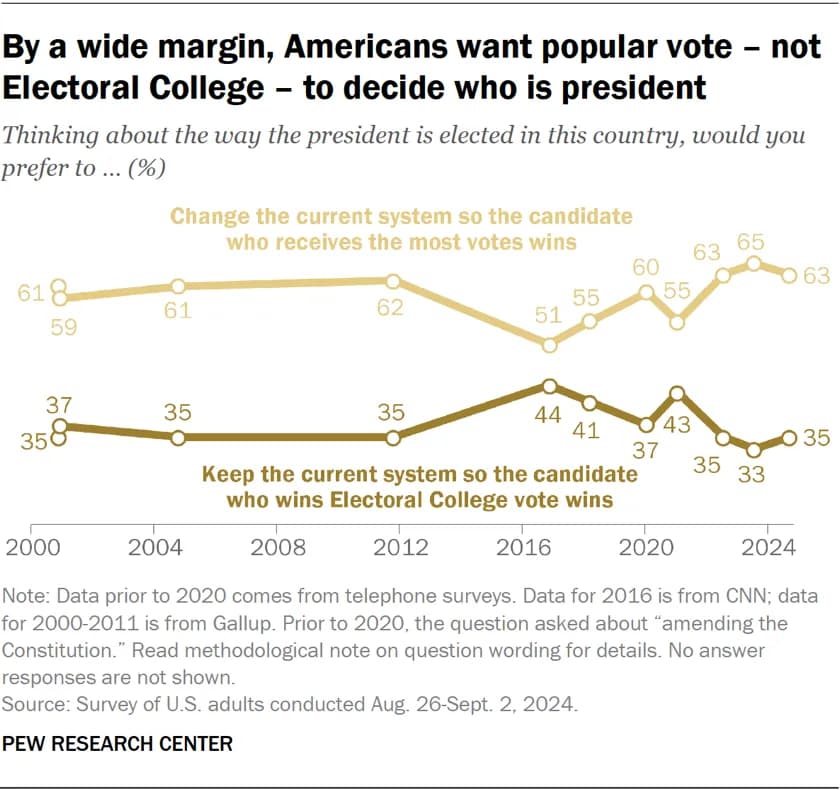
This structure means the national popular vote has no direct legal effect on the outcome. Because most states award all their electoral votes to the candidate who wins statewide, it is possible to lose the popular vote while still winning the presidency. That has happened five times, most recently in 2000 and 2016.
The Constitution created the system as a compromise between a direct popular election and selection by Congress. Supporters argue it forces candidates to build geographically broad coalitions and prevents large population centers from dominating elections. Critics counter that it distorts representation, sidelines voters in heavily partisan states, and allows presidents to take office without majority public support.
1440 Findings
Hours of research by our editors, distilled into minutes of clarity.


Explore Civics
An informed citizenry is the backbone and bulwark of a vibrant democracy. From the principles behind the founding of the country to the forces that shaped our modern institutions, explore the most illuminating and insightful Civics resources from across the internet.