Erie Canal
Overview
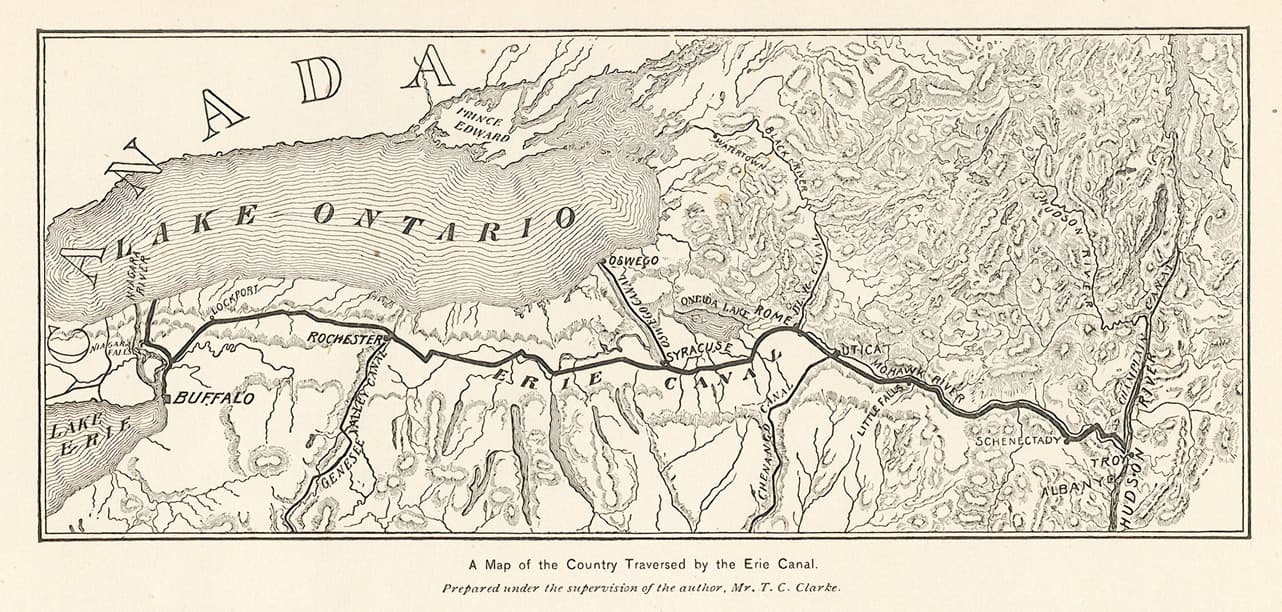
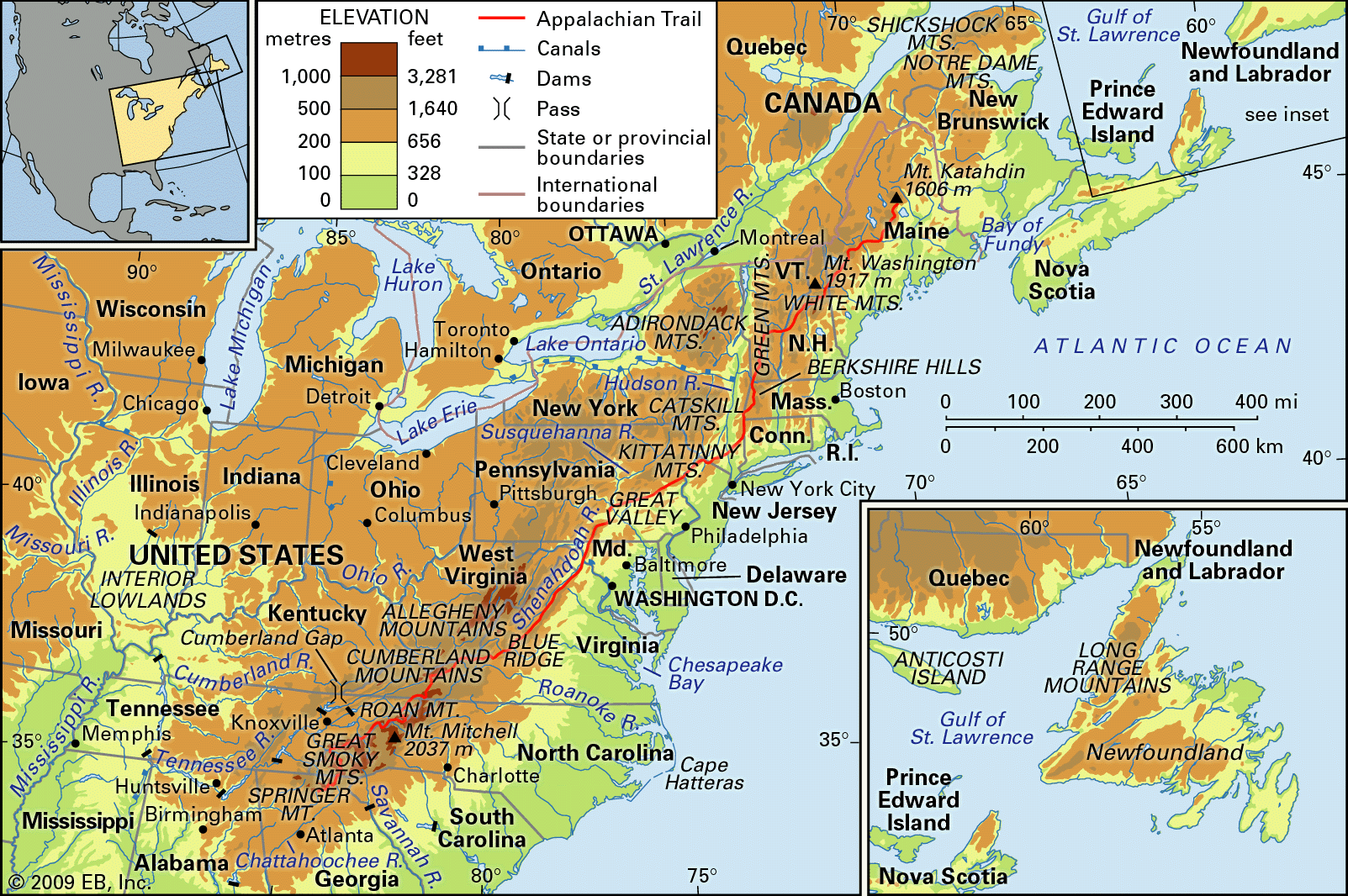
The Erie Canal is a 363-mile waterway in New York connecting the Great Lakes to the Atlantic seaboard, from the Hudson River at Albany to Lake Erie at Buffalo. Initiated in 1817 for $7M (nearly $200M today), the canal was America’s first major infrastructure project and revolutionized trade and commerce in the United States.
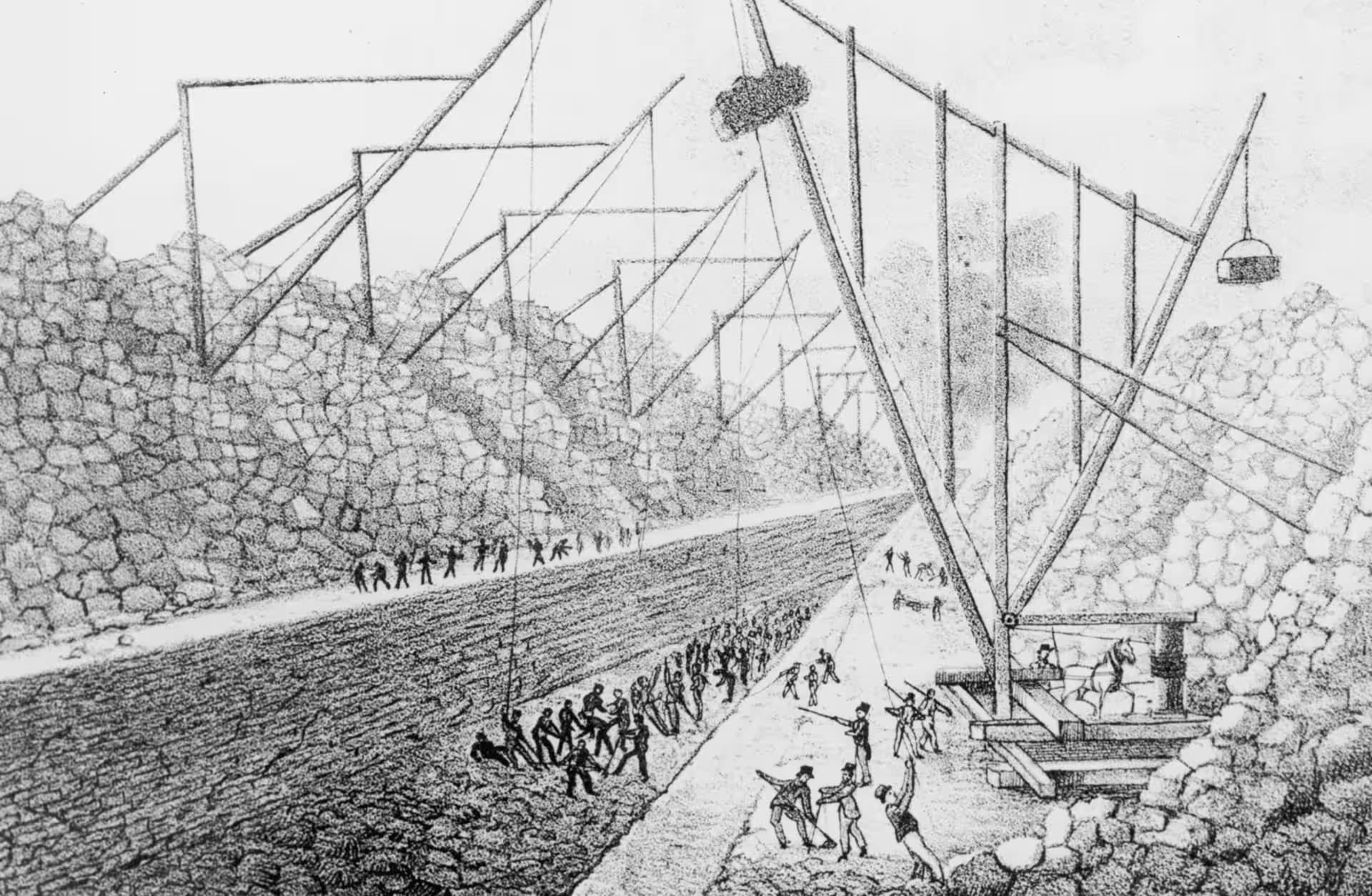
The project relied on self-taught amateurs—including teachers, judges, and surveyors. The workers, nearly 50,000, dug the entire canal with hand tools, picks, and gunpowder (dynamite had not yet been invented). The original Erie Canal had 83 locks, each designed to be operated by a single person. This moved boats through a 565-foot elevation change.
The canal revolutionized the American economy, allowing goods to be efficiently passed between the East Coast and the rest of the country. Freight charges dropped by 90%—from about $100 per ton to $10 on key routes. In the mid-1800s, the canal carried more settlers westward than any other route. The canal also allowed information to travel faster than ever before—news could travel between New York and Ohio in 10 days, instead of 30.
1440 Findings
Hours of research by our editors, distilled into minutes of clarity.

Explore World History
Weave together the many narratives of world history with our highly curated and expanding selection of diverse, fascinating resources designed to showcase the breadth and richness of Earth's story, from the earliest traces of human civilization to the dramatic developments of contemporary cultures.