Cryptography
Overview
Cryptography is the use of algorithms to hide information. These algorithms, or ciphers, involve a series of steps that turn readable plaintext into unreadable ciphertext, which can only be revealed with knowledge of the decryption key. Historically used to protect messages, such as military secrets, from unauthorized parties, modern cryptographic methods encrypt and secure almost all data, including banking transactions, medical records, and web traffic.
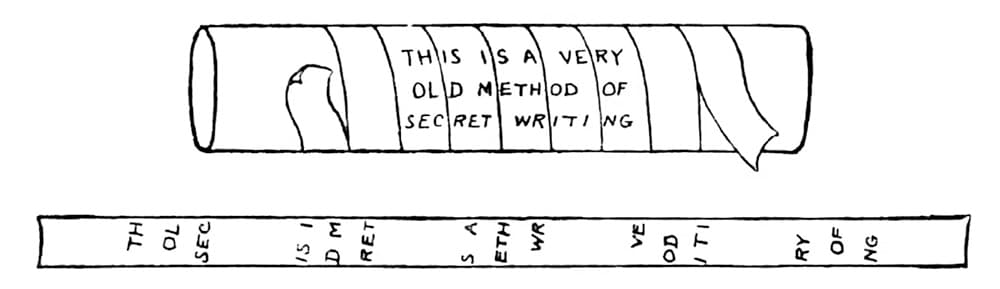
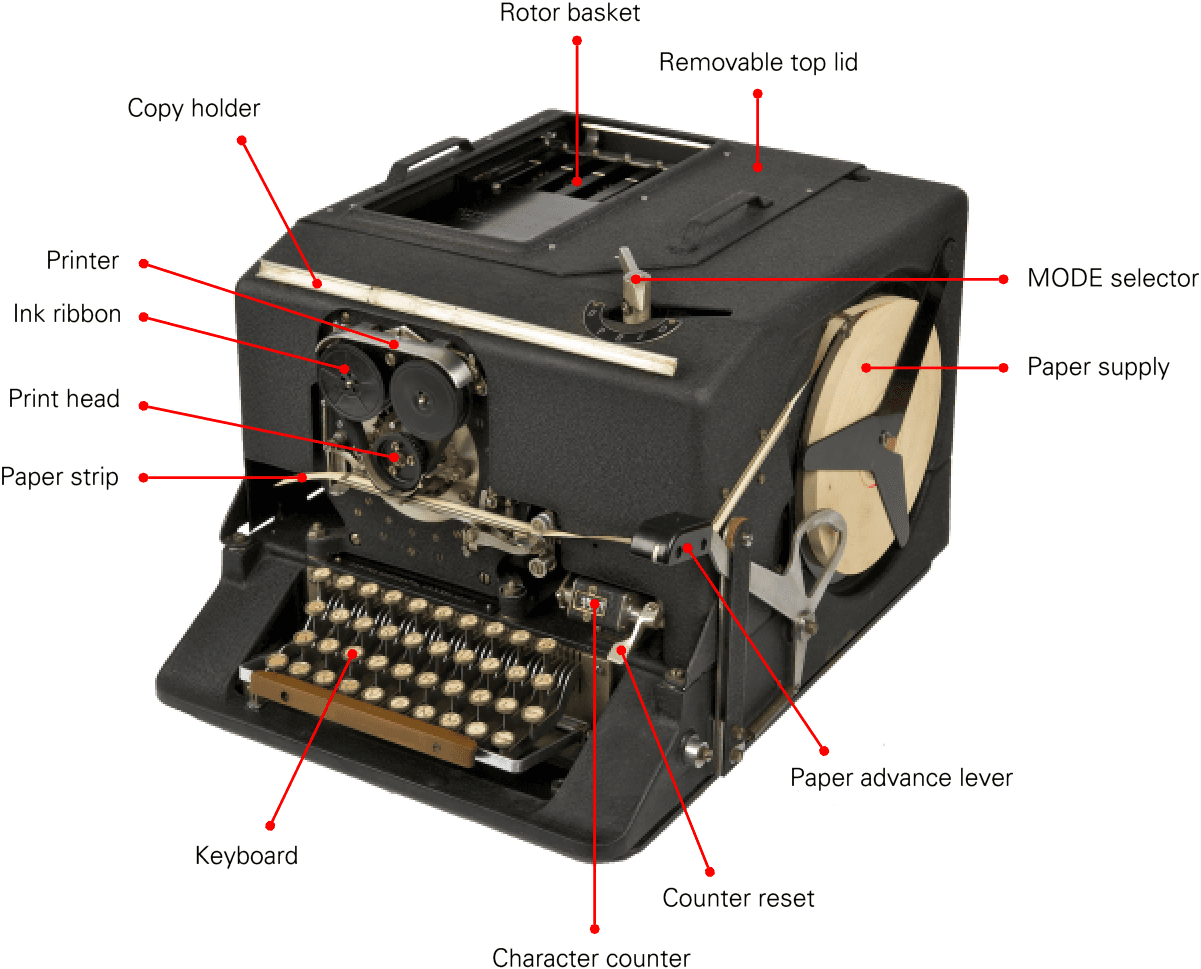
The earliest recorded ciphers involved substituting hieroglyphics, reversing the Hebrew alphabet, and coiled parchment that became illegible once unfurled. Like Nazi Germany's Enigma machine, these symmetric methods use the same key for encryption and decryption. With the advent of the information age, existing cryptographic methods became obsolete, as computers could quickly test many keys and, increasingly, individuals could not meet in person to securely exchange keys.
Introduced in the 1970s, asymmetric cryptography obscures communications between unacquainted parties by combining a publicly available key with a private key. Involving more computationally intensive mathematical functions, reverse-engineering private keys can take billions of years. Many systems leverage the security of asymmetric cryptography to privately share a key that can then be used for faster symmetric cryptography.
Because quantum computers can crack asymmetric cryptographic systems in hours, researchers have been actively developing quantum-resistant cryptographic standards.
1440 Findings
Hours of research by our editors, distilled into minutes of clarity.





Explore Science & Technology
Dive into the dynamic world of science and technology, where curiosity has brought about extraordinary understandings of the universe and creativity has led to the breakthroughs and innovations that have transformed our world. Explore a wide range of topics, from the natural and physical sciences to cutting-edge technologies and the people who shaped them, each of which is accompanied by carefully curated resources meant to inform, engage, and inspire those eager to uncover the nature of reality.
Featured Topics
- 3D Printing
- Algae
- Algorithms
- Asteroids
- Atoms
- Auroras
- Batteries
- Big Bang
- Bill Nye
- Biological Cells
- Bioluminescence
- Bioremediation
- Biosphere 2
- Black Holes
- Calculators
- Chaos Theory
- Climatology
- Comets
- Computer Viruses
- Coral Reefs
- Critical Minerals
- Crude Oil
- Cryptography
- Dark Energy
- Dark Matter
- Dark Web
- Data Centers
- David Attenborough
- Deep-Sea Mining
- Deepfakes
- Dinosaurs
- DNA
- Earth
- Earth's Atmosphere
- Earthquakes
- Eclipses
- El Niño-Southern Oscillation
- Electric Grids
- Electric Vehicles
- Electricity
- Environmental Protection Agency
- Extremophiles
- Fireworks
- Fracking
- General Relativity
- Generative AI
- Geothermal Power
- Grace Hopper
- Graphics Processing Unit
- Greenhouse Gases
- Helium
- Hubble Space Telescope
- Hurricanes
- International Space Station
- Internet
- Invasive Species
- James Webb Space Telescope
- Jupiter
- Keystone Species
- Large Hadron Collider
- Large Language Models
- Lasers
- Light
- Lightning
- LIGO
- Marie Curie
- Mars
- Memory
- Microchips
- Microplastics
- Mixed Reality
- Molecular Gastronomy
- Nancy Roman
- NASA
- National Science Foundation
- Neutron Stars
- Nikola Tesla
- Nobel Prize
- Nuclear Power
- Particle Accelerators
- Photosynthesis
- Plate Tectonics
- Pollinators
- Pontifical Academy of Sciences
- Quantum Computing
- Quantum Mechanics
- Radioactivity
- Rosalind Franklin
- Scientific Theory
- Self-Driving Cars
- Smart Cities
- Solar Power
- Sound
- Space Shuttle
- Space Tourism
- Space Trash
- Standard Model
- Stephen Hawking
- Sun
- Tardigrades
- Tesla
- Time
- Tornadoes
- Tsunamis
- Turbulence
- Viking Project
- Volcanoes
- Voyager Mission
- Water
- Wikipedia
- Wind Power