Deep-Sea Mining
Overview
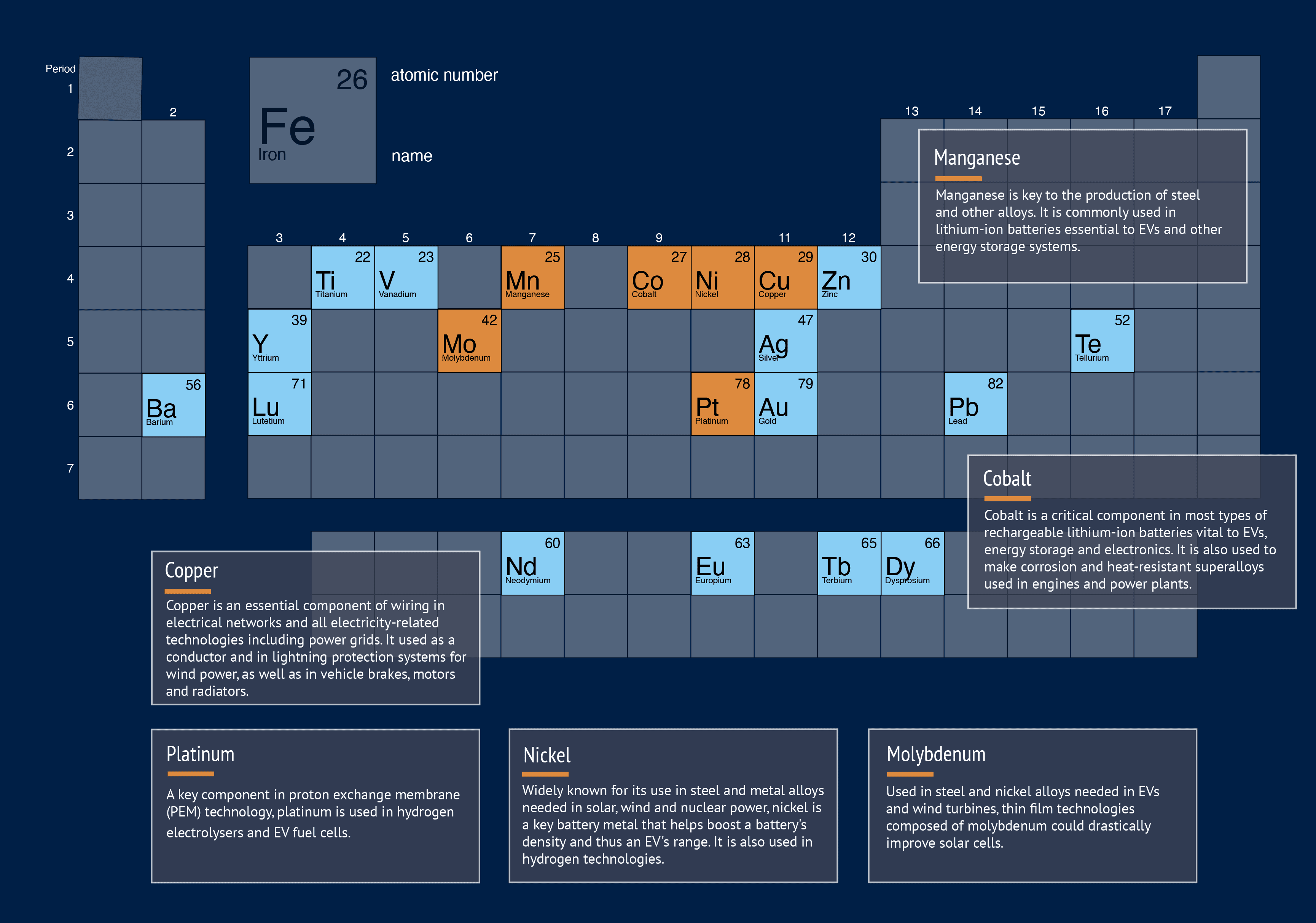
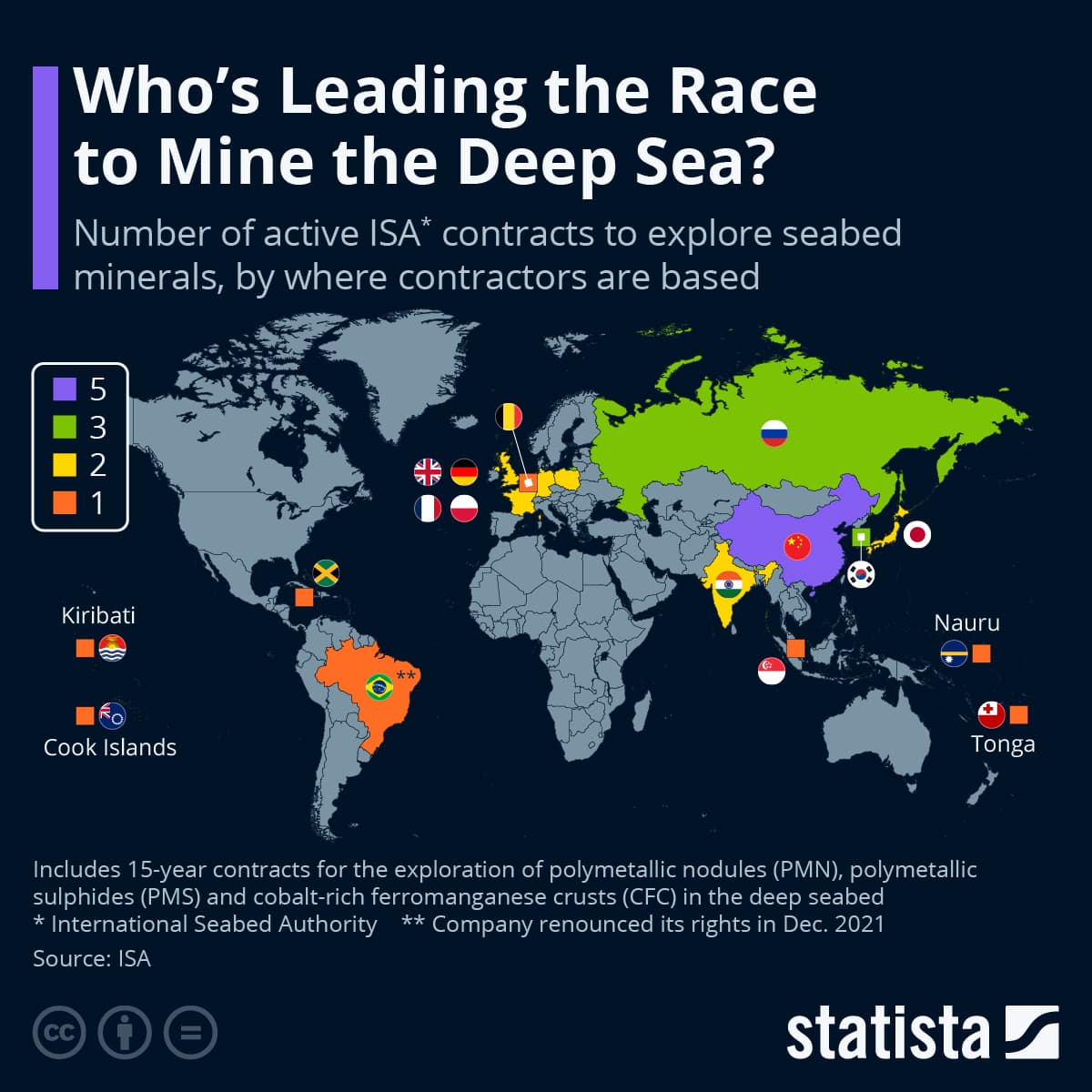
Deep-sea mining is the extraction of valuable minerals from the ocean floor. The process targets cobalt, nickel, copper, manganese, and other metals essential for electronics and clean-energy technologies. As of 2026, the International Seabed Authority has granted 32 contracts to institutions to conduct research, survey, and test equipment in specific areas, but there are no active commercial operations amid concerns about ecosystem disruption and biodiversity loss.
While some contracts explore harvesting deposits near underwater volcanoes or crusts that coat underwater mountains and ridges, the majority focus on polymetallic nodules. These metal-rich, potato-shaped rocks are scattered throughout abyssal plains—vast flatlands located between 3,000 and 6,000 meters (about 10,000 to 20,000 feet) below sea level. Across these plains, quantities of some minerals are estimated to surpass those found in land-based reserves.
In some planned operations, nodules would be suctioned up by machines roaming abyssal plains and piped up to surface ships for processing. Sediments, organic matter, and other waste would then be pumped back into the ocean. This collection and discharge would destroy seafloor habitats, injure organisms caught by rovers, and produce noise pollution and sediment plumes. These clouds could suffocate filter-feeding animals and disrupt bioluminescent organisms dependent on light for survival.
1440 Findings
Hours of research by our editors, distilled into minutes of clarity.






Explore Science & Technology
Dive into the dynamic world of science and technology, where curiosity has brought about extraordinary understandings of the universe and creativity has led to the breakthroughs and innovations that have transformed our world. Explore a wide range of topics, from the natural and physical sciences to cutting-edge technologies and the people who shaped them, each of which is accompanied by carefully curated resources meant to inform, engage, and inspire those eager to uncover the nature of reality.
Featured Topics
- 3D Printing
- Algae
- Algorithms
- Asteroids
- Atoms
- Auroras
- Batteries
- Big Bang
- Bill Nye
- Biological Cells
- Bioluminescence
- Bioremediation
- Biosphere 2
- Black Holes
- Calculators
- Chaos Theory
- Climatology
- Comets
- Computer Viruses
- Coral Reefs
- Critical Minerals
- Crude Oil
- Cryptography
- Dark Energy
- Dark Matter
- Dark Web
- Data Centers
- David Attenborough
- Deep-Sea Mining
- Deepfakes
- Dinosaurs
- DNA
- Earth
- Earth's Atmosphere
- Earthquakes
- Eclipses
- El Niño-Southern Oscillation
- Electric Grids
- Electric Vehicles
- Electricity
- Environmental Protection Agency
- Extremophiles
- Fireworks
- Fracking
- General Relativity
- Generative AI
- Geothermal Power
- Grace Hopper
- Graphics Processing Unit
- Greenhouse Gases
- Helium
- Hubble Space Telescope
- Hurricanes
- International Space Station
- Internet
- Invasive Species
- James Webb Space Telescope
- Jupiter
- Keystone Species
- Large Hadron Collider
- Large Language Models
- Lasers
- Light
- Lightning
- LIGO
- Marie Curie
- Mars
- Memory
- Microchips
- Microplastics
- Mixed Reality
- Molecular Gastronomy
- Nancy Roman
- NASA
- National Science Foundation
- Neutron Stars
- Nikola Tesla
- Nobel Prize
- Nuclear Power
- Particle Accelerators
- Photosynthesis
- Plate Tectonics
- Pollinators
- Pontifical Academy of Sciences
- Quantum Computing
- Quantum Mechanics
- Radioactivity
- Rosalind Franklin
- Scientific Theory
- Self-Driving Cars
- Smart Cities
- Solar Power
- Sound
- Space Shuttle
- Space Tourism
- Space Trash
- Standard Model
- Stephen Hawking
- Sun
- Tardigrades
- Tesla
- Time
- Tornadoes
- Tsunamis
- Turbulence
- Viking Project
- Volcanoes
- Voyager Mission
- Water
- Wikipedia
- Wind Power